
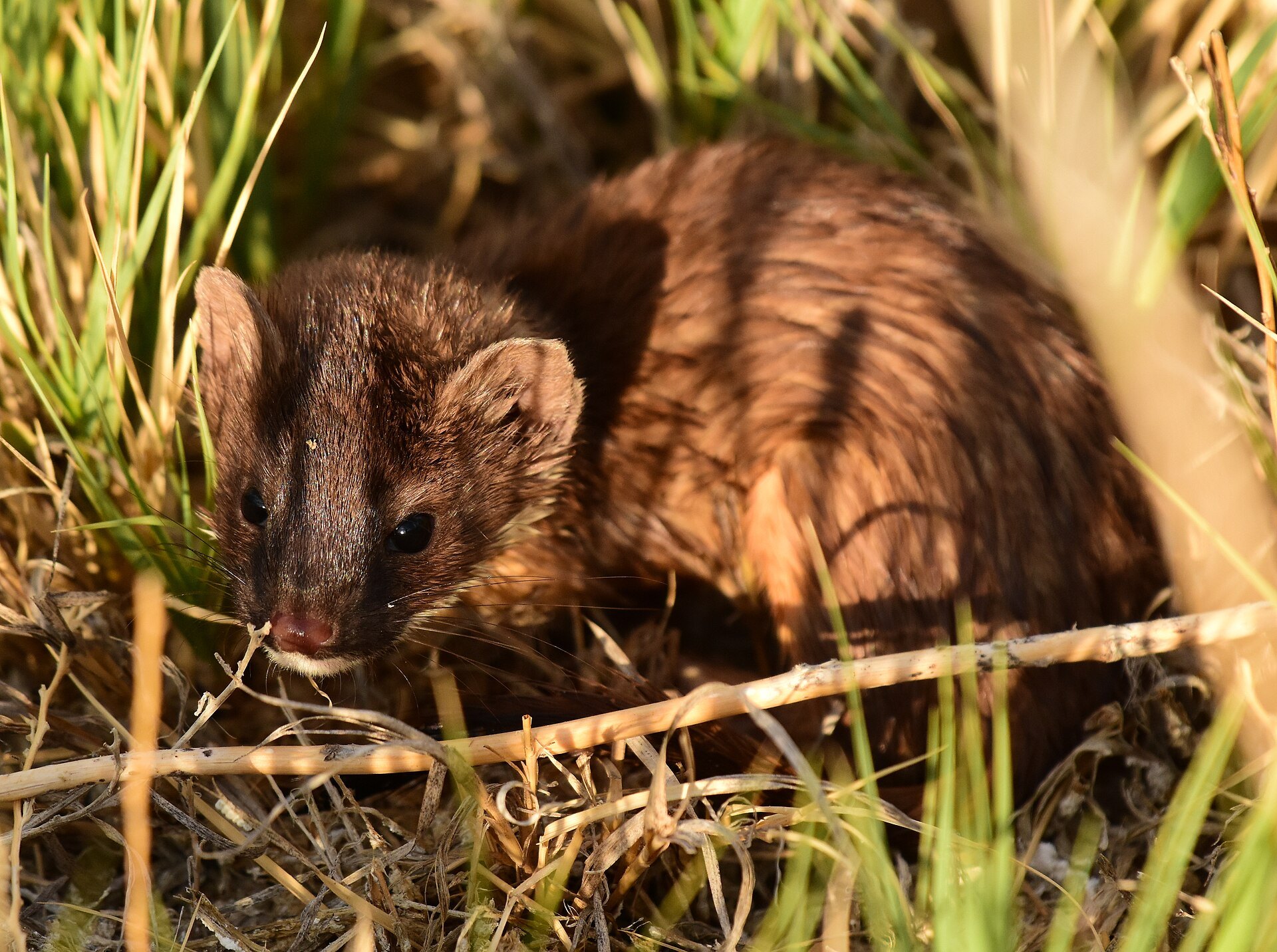
The best wildlife photographs we have ever taken were made sitting still, in a blind, for hours, while the country forgot we were there and went back to its business. A blind trades mobility for intimacy. It puts you at ground level with animals behaving naturally, in light you chose in advance, at distances that do not stress the subject. It also asks more of the photographer: patience, planning and a firm sense of the ethical lines.
Types of blinds and what each does well
A blind is anything that hides your shape and your movement. The simplest is a natural blind: a fallen log, a boulder, a screen of cedar, a dry creek bank. It costs nothing, but you take the angles it gives you. The pop up blind is the workhorse for most of us, a hub framed tent with windows on several sides; set it up several days before you use it so the deer or turkeys have time to decide it is furniture. A permanent blind, built of timber or steel and sited for a particular pond or feeding area, is what serious ranch photographers rely on; animals that have grown up with it ignore it. Floating blinds, a low camouflaged hull pushed through shallow water, get you to eye level with waterfowl and wading birds. Finally there is the vehicle, which on ranch roads is the blind animals fear least. Whatever the type, the principle is the same: a dark interior, a small opening for the lens, and a photographer who does not move.
Wind first, then everything else
Most mammals live by their noses. A deer, a hog or a coyote that catches your scent will leave before you know it was there, and it will stay gone for the day. So the first question about any blind is not where the light is good but where the wind goes. Site the blind downwind of where you expect the animals, or crosswind at worst, and check the forecast the night before. In Texas the prevailing summer wind is from the south and southeast, and a cold front turns it north overnight, making a perfect blind useless. Thermals matter too: early and late, cool air flows downhill, and through the middle of the day it rises, so a blind above a waterhole is good in the morning and betrays you in the afternoon. Birds care little about scent, but they see far better than we do and notice a lens moving in a window.
First light, last light and the middle of the day
The two golden hours, the hour after sunrise and the hour before sunset, are when most of the good pictures happen. The sun is low, the light is warm and directional, shadows are long and soft, and the animals are up, because deer, most birds and many predators feed at dawn and dusk and rest through the heat. Be in the blind at least 30 to 45 minutes before the light arrives, because the walk in is when you are most likely to be noticed. Front lighting, with the sun behind you, gives clean colour and catchlights in the eyes. Side lighting reveals texture in fur and feather. Back lighting rims an animal in gold and is the most dramatic when it works. Overcast days are underrated: the light is even and the animals stay active longer. Midday sun is flat and harsh, and a fine time to nap. Face the blind’s main window away from the sun you expect at your chosen hour, so the subject is lit.
Lenses, in general terms
You do not need the longest lens on the market, and from a blind you often need less than you think. What matters is working distance. A telephoto in the 300 to 600 millimetre range on a full frame camera fills the frame with a deer at 30 to 60 yards and a songbird at 10 to 15 feet, comfortable distances for both parties. A zoom gives flexibility when an animal walks in close. Fast apertures help at dawn and dusk, but modern sensors handle high sensitivity well enough that a slower, lighter lens is a fair trade. Use a tripod or a beanbag on the window ledge; a resting lens is sharper, and a still lens is one the animal does not see. Use a silent shutter mode if the camera has one; shutter noise at 20 yards is a dropped stick to a whitetail.
Baiting, feeders and the ethics of the picture
Photographing over a corn feeder or a water trough is common on Texas ranches and legal, and honest photographers disagree about it. Our position is that water is different from bait. A waterhole is part of the landscape; an animal drinking is doing what it would do anyway. Bait changes behaviour, concentrates animals unnaturally and, with some species, causes harm. Lines we hold to:
- Never bait predators. A coyote, fox or bear taught to associate people with food is a dead animal, and often a danger first.
- Never bait owls or raptors with live or store bought rodents. It habituates them to roads and people and is prohibited in many places.
- Never use recorded calls on nesting or endangered birds, and use them sparingly on anything else.
- Disclose. If a picture was made at a feeder or a captive facility, say so in the caption.
- Obey the law. Baiting rules vary by state and season, and what is allowed for hunting is not always allowed all year.
Distance, disturbance and knowing when to leave
The point of a blind is that the animal does not know you are there. If it does, the blind has failed and the picture, however sharp, records a stressed animal. Watch for the signals: a deer that stops feeding and stares, ears locked, stamping a foot; a bird that stops singing, crouches or gives an alarm call; a nesting bird that will not return to the nest. Any of these means you are too close or too visible, and the honest response is to stop, wait, and if it continues, leave quietly. If the animal changes what it is doing because of you, you are too close, whatever the distance. Never approach a nest, a den or a bedded fawn, and never move a chick or a branch for a cleaner shot. Take the frame the animal gives you. The pictures from a blind used well are the only ones we can look at afterwards without a twinge: the animal went on with its day, and so did we.