
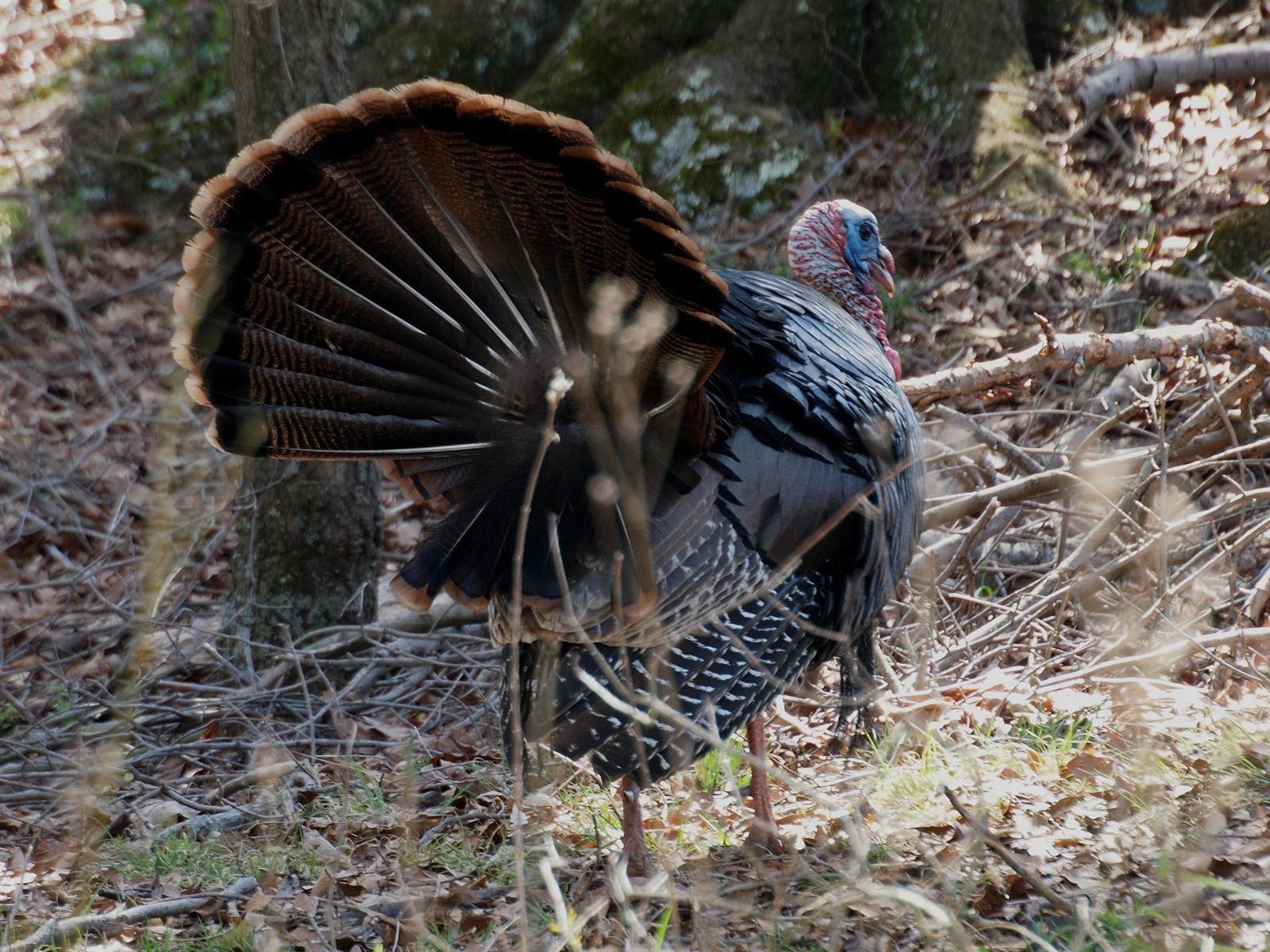
A wild turkey in full strut is one of the great sights of the American countryside, and one of the hardest to get close to. The bird that many people picture as slow and dim is in fact wary, sharp eyed and quick to leave. We have spent many mornings sitting against oak trunks waiting for turkeys to fly down, and the ones that went well had a few things in common: knowing where the birds sleep, knowing what they want at that time of year, and refusing to move when every instinct says to.
Five subspecies, one wary bird
The wild turkey was nearly gone by the early 1900s, with a continental population estimated at about 30,000 birds. Trap and transfer programmes rebuilt it to somewhere near 6 to 7 million across 49 states, southern Canada and Mexico. Biologists split the species into five subspecies. The Eastern is the most numerous and lives east of the Mississippi. The Osceola is confined to the Florida peninsula. The Merriam’s lives in the pine and ponderosa country of the Rockies. The Gould’s occupies the mountains of northern Mexico and a corner of Arizona and New Mexico. The Rio Grande is the bird of the plains and brush country, and it is the turkey of Texas, where roughly 500,000 of them roam the Hill Country, the Edwards Plateau and the river bottoms. Rio Grandes have buff tipped tail feathers, paler than the chestnut of an Eastern, and they are famous for roosting in the same big creek trees for generations.
A mature gobbler weighs 16 to 24 pounds, a hen 8 to 12. The male carries a beard of bristle like feathers from the chest, usually 9 to 11 inches long on an adult, plus leg spurs that can exceed an inch and a quarter on an old bird. Both sexes fly well for short distances, reaching 50 miles per hour in a burst, and run at 20 miles per hour, which is why nobody catches a turkey by chasing it.
Everything starts at the roost
Turkeys sleep in trees, and the roost is the anchor of their day. A flock will pick tall trees with open, horizontal limbs, often on a slope, near water, and usually with a clear flight path in and out. Cottonwoods, pecans, live oaks and sycamores along a creek are classic Rio Grande roosts. Look under likely trees for droppings, which are distinctive: a J shaped dropping usually comes from a gobbler, a spiral or popcorn shaped one from a hen. Body feathers and the odd tail feather collect there too.
Birds fly up around sunset and fly down about 20 to 30 minutes after first light, and the flock chatters before both. The best way to locate a roost without disturbing it is to be in position at dusk a few hundred yards away and simply listen; turkeys are loud going up, with heavy wingbeats and a lot of clucking. A flock that is bumped off its roost more than once or twice will abandon it, and that changes the whole neighbourhood for months.
Strutting, gobbling and what the calls mean
Spring is the show. From roughly March into May, driven by lengthening days, gobblers spread their tails into a fan, drop the wings so the primaries drag, puff the body feathers and pull the head back until the whole bird looks twice its size. The bare skin of the head flushes red, white and blue, and the fleshy snood over the beak stretches out. A strutting bird makes a low drumming sound that you feel more than hear, followed by a spit. The gobble itself carries a mile on a still morning and is meant to pull hens toward the male. In the natural order the hen goes to the gobbler, not the other way round, which is why a gobbler that hears a call and does not see a hen will often hang up and wait.
Hens have a vocabulary of their own. The yelp is the basic contact call, a series of five to eight notes. The cluck is a single sharp note. A cutt is a fast, excited string of clucks, and it usually means a hen is fired up. The purr is a soft rolling sound made by contented birds feeding together. Learning these sounds with a mouth call or a slate call is a pleasant winter hobby, and a soft yelp or two can bring a curious bird into view. Loud, constant calling does the opposite, because real hens do not call all morning.
Spring versus fall
In spring, flocks break up, gobblers are vocal and predictable, and hens are nesting on the ground in a shallow scrape lined with leaves, laying 10 to 12 eggs over about two weeks and incubating them for 28 days. The poults leave the nest within a day and can fly to low branches by about two weeks of age. In autumn the pattern reverses. Birds gather into large flocks, often 30 to 100 in good Rio Grande country, with hens and young in one group and gobblers in bachelor bands. They are quieter and spend the day feeding on acorns, pecans, grass seed, grasshoppers and waste grain. In fall the strategy is to find food and the trail between food and roost, rather than to listen for gobbling; a winter flock will walk a loop of several miles a day and repeat it with surprising fidelity.
Watching without spooking
A turkey’s eye is its main defence. The bird sees in colour, has a field of view of about 270 degrees without turning its head, and picks up movement at several hundred yards. It barely smells, which is a mercy, but its hearing is acute. Our rules for a good sit:
- Get in before first light, walking in the dark without a torch aimed at the roost, and settle against a tree wider than your shoulders.
- Wear full camouflage including face and hands, or sit in a small blind. Movement, not pattern, is what gives you away.
- Stay at least 100 yards from the roost tree and never approach it in the evening.
- Move only when a strutting bird’s fan is turned toward you and his eyes are hidden behind it.
- Leave the way you came, slowly, once the flock has fed out of sight.
Patience does the rest. A flock that never knows you were there will use the same trees tomorrow, and you will have a front row seat to one of the oldest performances in North America.