
A stove is the one piece of camp gear that gets used at every single stop, morning and night, and it is also the one most likely to be bought on impulse from a rack of shiny canisters. We have carried all three main types across deserts, wet mountains and a couple of winters, and each has a place. The right answer depends on where you are going, how cold it will be, how many mouths you are feeding, and whether you can buy fuel when you land. Here is how we think it through.
The three families and what they weigh
Canister stoves screw onto a pressurized cartridge of isobutane and propane. The smallest burners weigh 2 to 3 ounces and cost 30 to 70 USD; integrated systems with a heat-exchanger pot weigh 12 to 16 ounces and cost 100 to 180 USD. They light instantly, simmer well, and need no priming.
Liquid fuel stoves burn white gas from a refillable bottle that you pump by hand. The stove alone is 10 to 14 ounces, the pump and bottle add another 5 to 8, and prices run 100 to 200 USD. Multi-fuel versions also burn kerosene, diesel and unleaded gasoline with a jet change.
Alcohol stoves are the minimalist option: a small cup or double-walled can that burns denatured alcohol or high-proof ethanol with no moving parts. A commercial burner weighs under 1 ounce and costs 10 to 30 USD; a homemade one from a soda can weighs even less and costs nothing. The stove is light but the fuel is not, and that trade is the whole story with alcohol.
Boil times and real fuel economy
The standard benchmark is how long it takes to bring half a liter of water to a rolling boil at sea level with no wind. A good canister stove does it in 3 to 4 minutes; integrated heat-exchanger systems drop that to 2 to 3. White gas stoves land at 3 to 5 minutes once primed. Alcohol takes 6 to 10 minutes and often longer in a breeze, and the flame is nearly invisible in daylight, so you learn to listen for it.
Fuel weight matters more than boil time on a long trip. A full 8-ounce canister boils roughly 15 to 20 half-liter pots and weighs about 13 ounces with its steel shell. White gas boils more per ounce than anything else and the bottle can be topped off exactly, so nothing is wasted. Alcohol has about half the energy per ounce of white gas, so a week of two boils a day means carrying a pound or more of fuel that a canister user would cover with one cartridge. For trips under four days alcohol wins on total weight; past a week it usually loses.
Cold weather changes everything
Canister fuel depends on vapor pressure. Isobutane stops vaporizing near 12 degrees Fahrenheit and plain butane near 31, so as the cartridge empties and chills on a winter morning the flame sputters to nothing. Tricks help: sleep with the canister in your bag, stand it in a shallow dish of water, or use a remote-canister stove with a preheat tube that lets you flip the cartridge to feed liquid fuel. A stove sold with a built-in pressure regulator holds output better down to around 15 degrees. Below that we stop trusting canisters entirely.
White gas does not care about temperature. You pump the bottle to build pressure, prime the burner with a small puddle of fuel, and once the generator tube is hot it will melt snow at 20 below all day. This is why liquid fuel remains the standard for winter camping and high altitude expeditions, where melting snow for water is the main job and a stove may run two hours a day.
Alcohol lights in the cold but burns slowly, and every degree it is cooler the boil time stretches. It is fine for shoulder seasons and poor for real winter.
Finding fuel abroad
This is where many trips go sideways. Compressed fuel cannot fly in checked or carry-on baggage, so you buy canisters at your destination, and the threaded cartridge standard is common in North America, Europe, Japan, New Zealand and most trekking hubs, but rare in much of Africa, Central Asia and rural South America. Some countries still favor the older pierce-through or clip-on cartridge, and adapters exist but add weight and risk.
Liquid fuel is the traveler’s friend. Automotive gasoline is available nearly everywhere on earth, and kerosene in most of the developing world. A multi-fuel stove that burns them will clog faster and needs cleaning every few days, but it will run. White gas itself sells under different names, so ask for camping fuel or naphtha rather than a brand.
Alcohol is the easiest of all to find: pharmacies stock rubbing alcohol, hardware stores stock denatured spirits, and liquor stores stock high-proof grain alcohol. Just avoid isopropyl below 90 percent, which burns sooty and slow. Note that a few land managers ban alcohol stoves during high fire danger because they cannot be shut off, so check the current rules before you commit.
Safety and the small habits that matter
Never run any stove inside a tent or a closed vehicle. Carbon monoxide has no smell and a small burner can raise it to dangerous levels within minutes in an enclosed space; several deaths a year trace back to cooking in a vestibule with the door zipped. Cook in the open, or at most in a vestibule with both ends wide open and a hand ready on the stove.
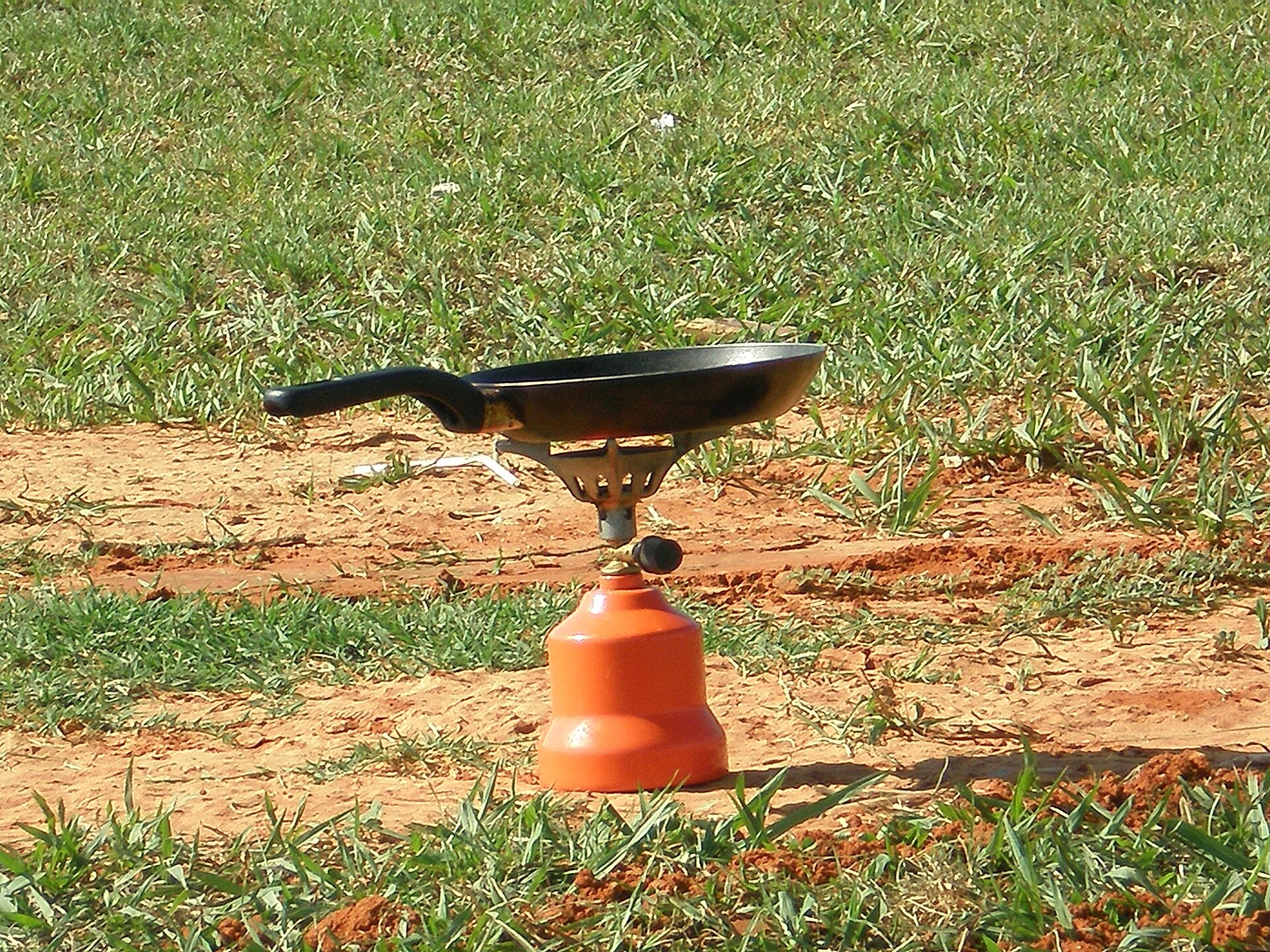
Set the stove on bare mineral soil or a flat rock, never on dry grass or a picnic table. Tall pots on a small canister tip easily, so keep water levels modest and use a stabilizer base if you cook with a wide pot. With liquid fuel, prime with a tiny amount and stand back until the yellow flame turns blue. With alcohol, never refill a burner that is still warm; the invisible flame has surprised more than one cook, and a spilled burning cup spreads fast.
Our own kit reflects all this: a small canister stove for three-season trips in the Hill Country and the mountains, an alcohol burner for solo fast trips, and an old white gas stove that comes out for winter and for overseas work where canisters are a gamble. Buy the one that matches the trips you actually take, learn it at home first, and it will be the most dependable thing in your pack.