
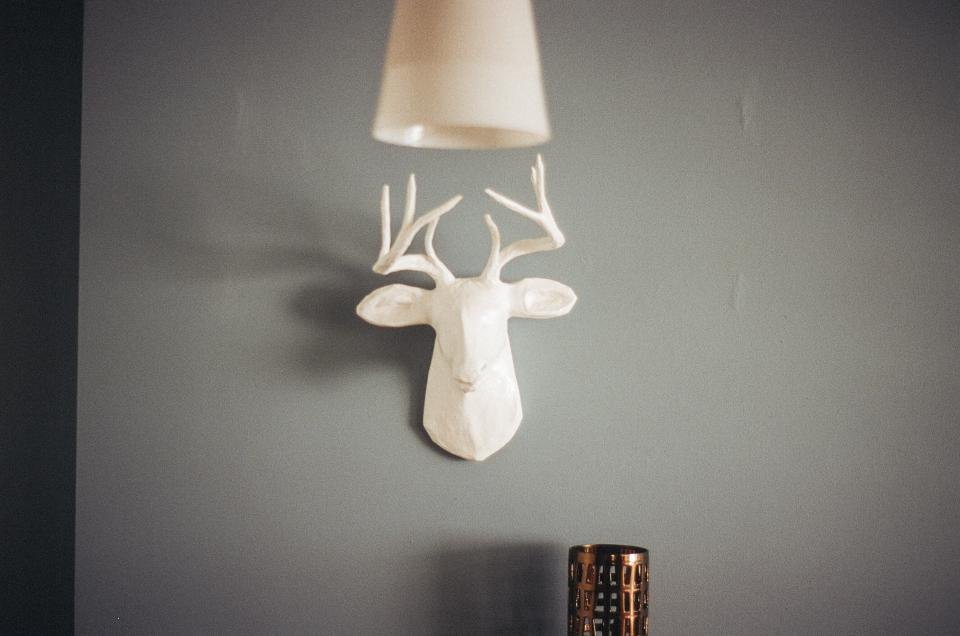
A shoulder mount is the most common piece of taxidermy in North America, and also the one most people misunderstand. Visitors often assume the animal’s head is somehow preserved whole. It is not. What hangs on the wall is a tanned hide stretched over a sculpted form, with glass eyes, a rebuilt nose, and a great deal of patient handwork in between. We spent time in several workshops to follow the process from the field to the finished piece, and this is what happens during those six to twelve months of waiting.
Caping: where the mount begins
The word cape refers to the hide of the head, neck and shoulders, and caping is the act of removing it correctly. A taxidermist needs far more skin than most hunters expect. The cut should be made well behind the front legs, roughly at the midpoint of the body, then straight up over the back to the base of the skull. Too little hide, and the form has to be shortened or the mount pieced together with extra skin, which never looks right.
The head itself is usually left attached to the cape and frozen whole, because the delicate work around the eyes, lips, ears and nose is best done with proper tools and good light. A studio will turn the ears inside out, split the lips, remove the eyelids’ inner tissue, and separate the nose cartilage, all without piercing the hide. This is hours of fine knife work, and it decides whether the finished face looks alive or merely stuffed.
Fleshing and salting
Once the cape is off the skull, every scrap of meat, fat and membrane must come off the inside of the hide. Large studios use a rotary fleshing machine with a curved blade; smaller ones use a fleshing beam and a hand knife. The goal is a skin of uniform thickness with no fat left to turn rancid. Fat that survives fleshing is the usual reason an old mount develops a greasy, yellowing look decades later.
The fleshed cape is then salted heavily, with fine, non-iodized salt rubbed into every fold and around the ears and lips. Salt pulls moisture out of the skin and sets the hair, which means the follicles tighten and the hair stops slipping. A cape is normally salted twice over two or three days, drained, and either dried flat or shipped to a tannery in that state.
Tanning: turning skin into leather
Raw skin rots; tanned skin lasts a century. Tanning converts the proteins in the hide into a stable, supple material that insects find far less appetizing and that will not decay in a warm room. Most commercial taxidermy uses a wet tan, where the cape is pickled in an acid bath for several days, shaved to an even thickness, neutralized, and then run through a tanning solution. The finished hide is oiled so it stays flexible enough to stretch over a form.
Many studios send capes to specialist tanneries in batches, which is one reason a mount takes so long. A tannery may hold a batch for two to four months before returning it. Studios that tan in house can move faster, but the chemistry has to be right or the hair will fall out months after the mount is delivered.
Forms, eyes and the sculpting of a face
The form is the sculpted body underneath. Modern forms are cast in rigid polyurethane foam from a sculptor’s original, and they come in hundreds of poses and sizes: upright, semi-sneak, full sneak, left turn, right turn, and so on. The taxidermist measures the animal’s eye-to-nose distance and neck circumference before the cape is ever removed, and orders a form to match. A form that is a size too large will split the hide at the seam; one too small leaves loose, wrinkled skin.
The eyes are glass or acrylic, hand-painted, with a correct pupil shape for the species: horizontal and oblong for deer and elk, round for bears and cats. They are set in clay pressed into the form’s eye sockets, and the sculpting of that clay around the eyelids, tear ducts and brow is where experienced hands show. The same clay rebuilds the nose pad, the inner ear, and the lips. Ear liners, thin shells of plastic, are glued into the turned ears so they hold their shape.
Mounting and the long drying
With the form prepared, the tanned cape is soaked, wrung out, coated inside with hide paste, and worked onto the form. The seam up the back of the neck is sewn closed with a fine, hidden stitch. The taxidermist then spends hours adjusting the skin: aligning the hair patterns, tucking the lips, pinning the eyelids, setting the ears at the angle the pose calls for. Everything is held with pins and cardboard strips while the paste cures.
Drying takes three to six weeks in a controlled room. As the hide dries it shrinks slightly and locks onto the form. Only then can the pins come out and finishing begin.
Finishing, timelines and what it costs
Finishing is the part few customers ever see. Dried skin around the eyes and nose loses its color, so the taxidermist rebuilds it with epoxy and airbrushes the nose, eyelids, inner ears and any bare skin back to a natural tone. The hair is groomed, the antlers are cleaned and reattached to the skull plate on the form, and the whole thing is mounted on a panel or a hanger.
Put together, the sequence explains the wait. A busy studio might receive a few hundred animals during a single autumn, and each one passes through fleshing, salting, a tannery queue, weeks of drying, and days of finishing. Six to twelve months is normal; some highly regarded shops quote longer and are still fully booked. Anyone promising a whitetail shoulder mount in a few weeks is either very quiet or cutting corners on the tan.
As for price, a whitetail deer shoulder mount in the United States typically runs from about 550 to 900 dollars, with elk and moose at 900 to 2,000 dollars and more because of the size of the form and the volume of hide. Bears, pronghorn and exotics vary by region and by the reputation of the shop. Deposits of a third to a half are usual, and most studios add a fee for an open-mouth mount with a cast jaw set. It is a fair reflection of the hours involved, and a good way to honor an animal that was legally and thoughtfully taken.