
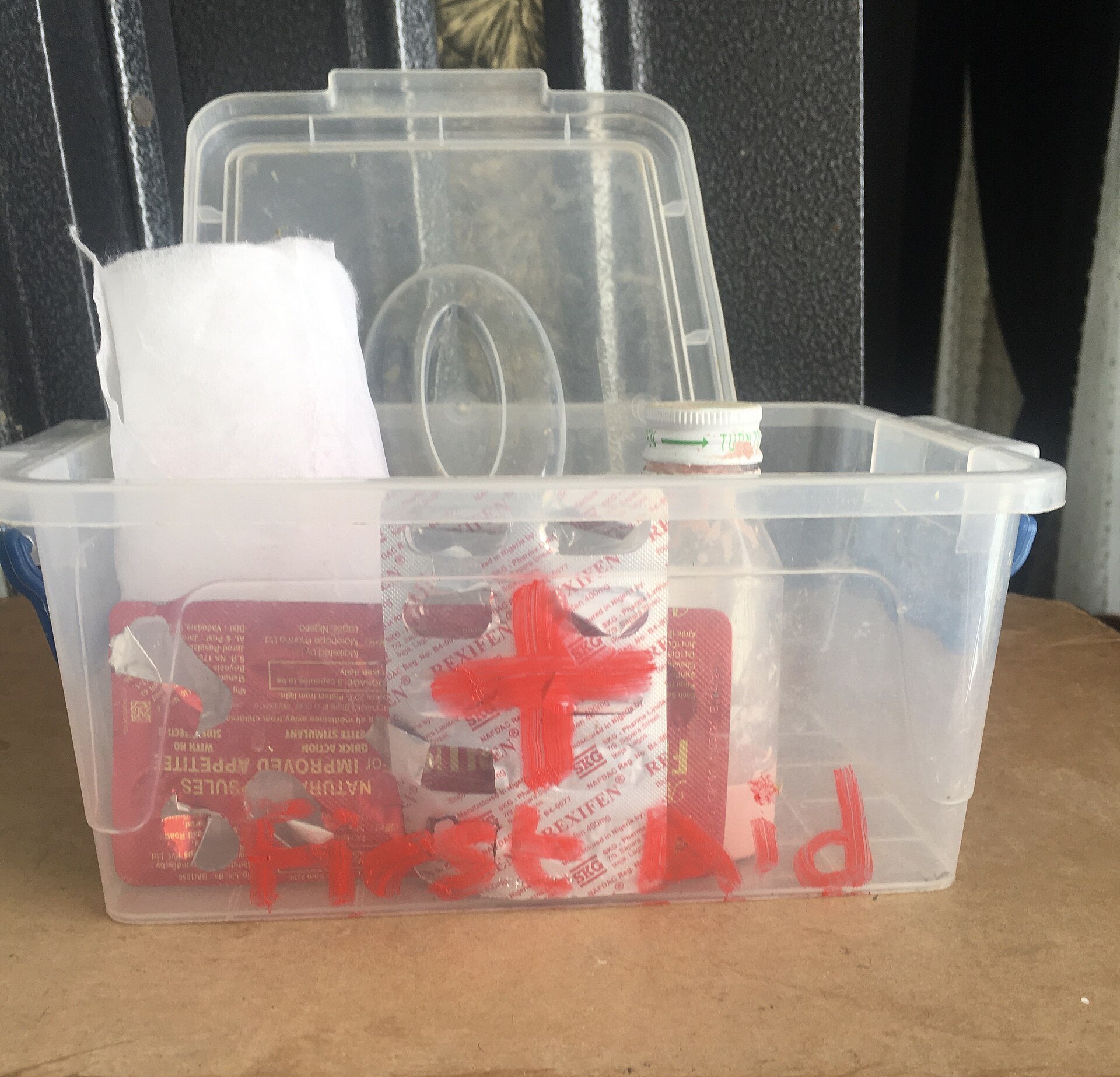
A backcountry first aid kit is not the plastic box from the pharmacy shelf, though that is what most people carry. The box is built for a house with a phone and a car outside. In the field the injuries are different, the help is hours away, and every ounce rides on your back. We have settled on a system that scales with the trip. It is built around what actually happens out there, which is mostly blisters, cuts, sprains, ticks and stomach trouble, with a thin layer of planning for the rare bad day.
The core kit for any day trip
Everything below fits in a quart freezer bag and weighs about 6 ounces. Assemble it yourself; a comparable commercial kit runs 25 to 45 USD but usually skips the items we use most.
- Blister care: a sheet of hydrocolloid dressings, a small roll of cloth athletic tape, and a few pre-cut moleskin patches.
- Wound care: a dozen adhesive bandages in two sizes, four 4-inch gauze pads, a roll of 3-inch conforming gauze, wound closure strips, and antibiotic ointment in single-use packets.
- Tools: fine-tipped tweezers, small scissors or a blade, six safety pins, nitrile gloves, and an irrigation syringe of 10 to 20 milliliters.
- Medicines: ibuprofen, acetaminophen, an antihistamine, loperamide for diarrhea, an antacid, and any personal prescriptions with two extra days of doses.
- Extras: an elastic wrap, a triangular bandage, a pencil and waterproof paper, and a compact printed guide to wilderness first aid.
Scaling up for longer trips and bigger groups
For two to four nights, add a second set of gauze and tape, a small bottle of povidone-iodine or chlorhexidine for cleaning deep wounds, an aluminum splint that rolls flat, a compact emergency blanket, and oral rehydration salts. Double the medicines. If anyone in the party has a known severe allergy, two epinephrine auto-injectors go in the kit, not in their pocket, and everyone knows where they are.
Past five nights or away from any cell signal, the kit becomes a medical bag: a SAM-style splint, a proper trauma dressing, a tourniquet that you have practiced applying, a thermometer, tick-borne illness notes for the region, and a satellite messenger or personal locator beacon. A beacon costs 250 to 400 USD with no subscription; a two-way messenger costs 150 to 350 USD plus 12 to 40 USD per month. For a group of six or more we add a second small kit so the party can split.
Knowledge weighs nothing. A two-day wilderness first aid course, typically 150 to 300 USD, teaches more than any kit contents list, and if you lead trips for others the 70-hour wilderness first responder standard is the one to aim for.
Blisters, the injury you will actually treat
Blisters end more trips than anything else, and they are almost entirely preventable. The moment you feel a hot spot, stop and cover it. Do not wait until the next break. Clean the area, apply a hydrocolloid dressing or a square of tape directly over the spot, and reduce friction inside the boot with a thinner sock or by tightening the lacing above the ankle. Address damp socks; wet skin blisters at a fraction of the friction dry skin tolerates.
If a blister has already formed and is small, leave it intact and pad around it with a moleskin donut. If it is large and will burst anyway under the boot, drain it: clean the skin, sterilize a needle with a flame or alcohol, puncture at the base, press the fluid out, leave the roof of skin in place, and cover with antibiotic ointment and a dressing. Check it every evening for redness spreading beyond the edge, which means infection and a hard look at ending the trip.
Ticks and the snakebite myths that hurt people
Texas has lone star, blacklegged and American dog ticks, and between them they carry ehrlichiosis, Rocky Mountain spotted fever, tularemia and, less commonly here than in the Northeast, Lyme disease. Removal is simple and the folk methods are all wrong: no matches, no petroleum jelly, no twisting. Grasp the tick with fine tweezers as close to the skin as possible and pull straight out with steady pressure. Clean the site. Note the date, and if a fever, rash or unusual fatigue shows up within 30 days, see a doctor and mention the bite. Permethrin-treated clothing and a full-body check each evening prevent most bites in the first place.
Snakebite is rarer than people fear and worse handled than almost anything. About 7,000 to 8,000 venomous bites occur in the United States each year and roughly five are fatal. Every one of the old remedies makes outcomes worse. Do not cut the wound, do not suck the venom, do not apply a tourniquet, do not ice it, and do not use a suction kit, which has been shown to remove almost nothing. Do not try to catch or kill the snake. What helps: keep the person calm and still, remove rings and tight clothing before swelling starts, keep the bite roughly at heart level, mark the edge of the swelling with a pen and the time, and get to a hospital. Antivenom is the only treatment, and it works best in the first few hours. Carry the person if the walk is short; if it is long, a slow steady walk out beats waiting for help that may not come.
When to call for help
The hard part of backcountry medicine is judgment, not technique. Call, activate a beacon or send a runner for any of the following: chest pain, difficulty breathing, a head injury with confusion or vomiting, a suspected spinal injury, a deformed limb or open fracture, bleeding that will not stop with 10 minutes of direct pressure, a venomous snakebite, an allergic reaction affecting the airway, or a fever with a stiff neck. Also call when someone cannot walk out on their own and you cannot carry them safely, which is most of the time with an adult.
When you do call, have the essentials ready: your location as coordinates, the number of patients, what happened, the patient’s condition and what you have done, and how many people are with you. Then stay put and keep the patient warm, since hypothermia complicates every other injury. A modest kit and a clear head will handle almost everything the field throws at you, and knowing the limits of both is what keeps a bad day from becoming a tragedy.