
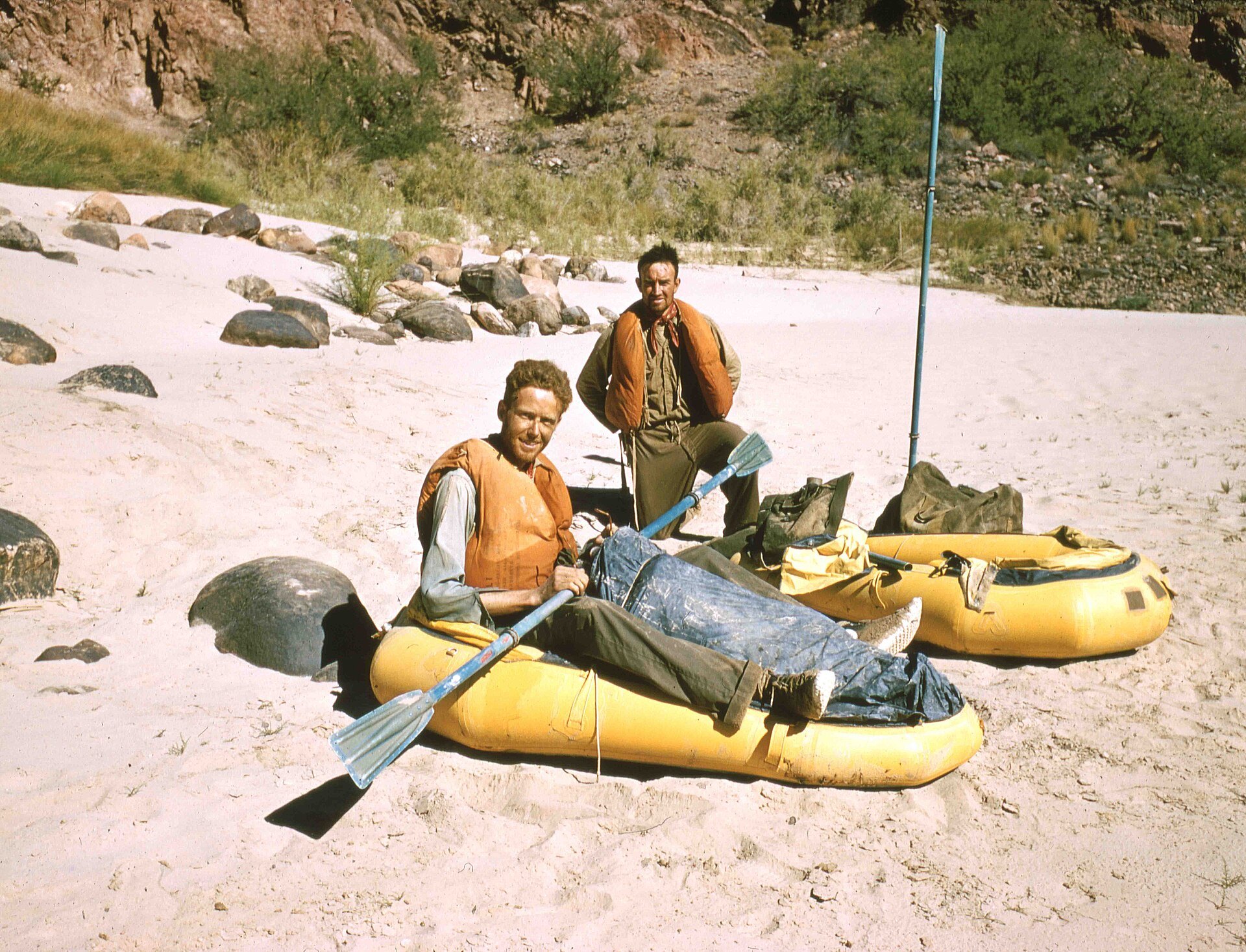
An inflatable boat is the piece of camping gear that most often ends up sitting in the garage. It looked like a great idea at the store, a boat that folds into the trunk and gets you to the island campsite, and then it turned out to be heavy, slow to inflate and a chore to dry. Yet for the right trip an inflatable is not a compromise but the best tool there is. We have carried packrafts into canyon country and rowed a heavy dinghy to a lake camp with a week of supplies, and this is how we decide whether one belongs on the trip.
PVC or Hypalon
Inflatable hulls are made from a woven fabric coated with a plastic or a synthetic rubber. The two names you will see are PVC and Hypalon, the latter originally a trade name for chlorosulfonated polyethylene that has become the generic term. PVC is cheaper and lighter, and its seams can be heat-welded rather than glued, which makes for a clean, strong joint. Its weakness is sunlight: ultraviolet light and heat make PVC stiff and brittle over the years, and a boat left inflated in the Texas sun will show it. Expect five to ten years of life with reasonable care. Hypalon resists ultraviolet, ozone, fuel and abrasion far better, and a well-kept Hypalon boat can last twenty years. It costs roughly twice as much and its glued seams need more skill to repair. For a boat that will live outside or spend whole seasons on the water, Hypalon earns its price. For a boat used a dozen weekends a year and stored indoors, PVC is fine.
Packrafts and many inflatable kayaks use a third option, a nylon fabric coated with polyurethane. It is light, tough for its weight, and easy to patch in the field with the tape and glue in the repair kit.
Packrafts versus dinghies
These are two different animals. A packraft is a one-person boat that weighs between 5 and 9 pounds, rolls to the size of a sleeping bag, and inflates with a nylon bag rather than a pump. It carries a paddler and a backpack, typically up to 250 or 300 pounds, and it is meant to be carried for miles and then paddled down a river or across a lake with a four-piece kayak paddle. Its limits are speed and wind; a packraft on a broad lake in a headwind is slow, tiring work.
A dinghy or tender is a wide, stable, blunt-nosed boat of 8 to 12 feet with a rigid or inflatable floor, built to be rowed or pushed by a small outboard. It carries three to five people or a serious load of gear, and it is the right choice for a base camp on an island, for fishing, or for ferrying children and a dog from a dock. It weighs 40 to 100 pounds and packs into a bag the size of a large duffel that takes two people to lift. Between the two sit inflatable kayaks and canoes, which are more efficient to paddle than either and are the sensible choice for a couple planning a lake trip.
Weight, packed size and the drying problem
Add the accessories before you decide the boat fits in the car. A dinghy needs oars, a pump, a repair kit and probably a small anchor; with a plywood floor the bundle can reach 120 pounds. An inflatable kayak with a pump and two paddles runs 30 to 50 pounds. A packraft kit with paddle and life jacket is under 15 pounds. A wet boat rolled up in a bag will mildew in a week, so dry it on site, which takes an hour in sun and wind, or unroll it at home. Sand in the seams and valves is the other enemy; rinse the boat before it goes in the bag.
Pumps, pressure and life jackets
Hull tubes on most inflatables run at a modest 2 to 3.5 pounds per square inch, but drop-stitch floors and rigid-feeling kayaks need 8 to 12 psi, and no amount of lung power will get there. A double-action hand pump with a gauge is the most reliable tool and works for any boat; a foot pump is fine for a small dinghy. A 12-volt electric pump run from the car will fill a large boat in a few minutes and is worth its price if you launch from a vehicle. Check pressure again after the boat has been in cold water, because the air contracts and the hull goes soft, and let a little out if the boat sits on a hot beach at midday.
Everyone in an inflatable wears a personal flotation device, not because the boat is likely to sink but because inflatables are light, ride high and can flip or be blown offshore with surprising ease. Choose a Coast Guard approved Type III jacket that fits snugly and lets you paddle or row, and make sure the children’s jackets match their weight. On water below about 60 degrees Fahrenheit, cold shock is the real danger, and a wetsuit or dry top turns a capsize from an emergency into a story.
When a canoe or kayak is better
If the trip involves a car, a lake or a slow river, and more than a couple of miles of paddling a day, a hardshell canoe or kayak will be faster, track straighter in wind, carry more, and shrug off rocks and gravel bars that would grind through a fabric hull. A canoe also loads and unloads at the shore in seconds, with no pump and no drying. The inflatable wins when the boat has to travel in a small car or on your back, when storage at home is a closet, or when the route includes a long portage or a hike in.
What they cost
Prices in the United States are broad. A basic PVC dinghy for two or three people runs $300 to $1,000; a Hypalon tender from a reputable maker is $1,500 to $4,000. Inflatable kayaks range from $150 for a pool-grade toy to $600 for a solid touring boat and $1,200 and up for a drop-stitch model. Packrafts start around $300 for a light, calm-water design and climb to $900 to $1,500 for a whitewater-capable boat with a spray deck. Budget another $30 to $150 for a good pump, $50 to $150 per life jacket and $80 to $250 per paddle. Buy the boat for the water you will actually be on, and then get it out of the garage.