
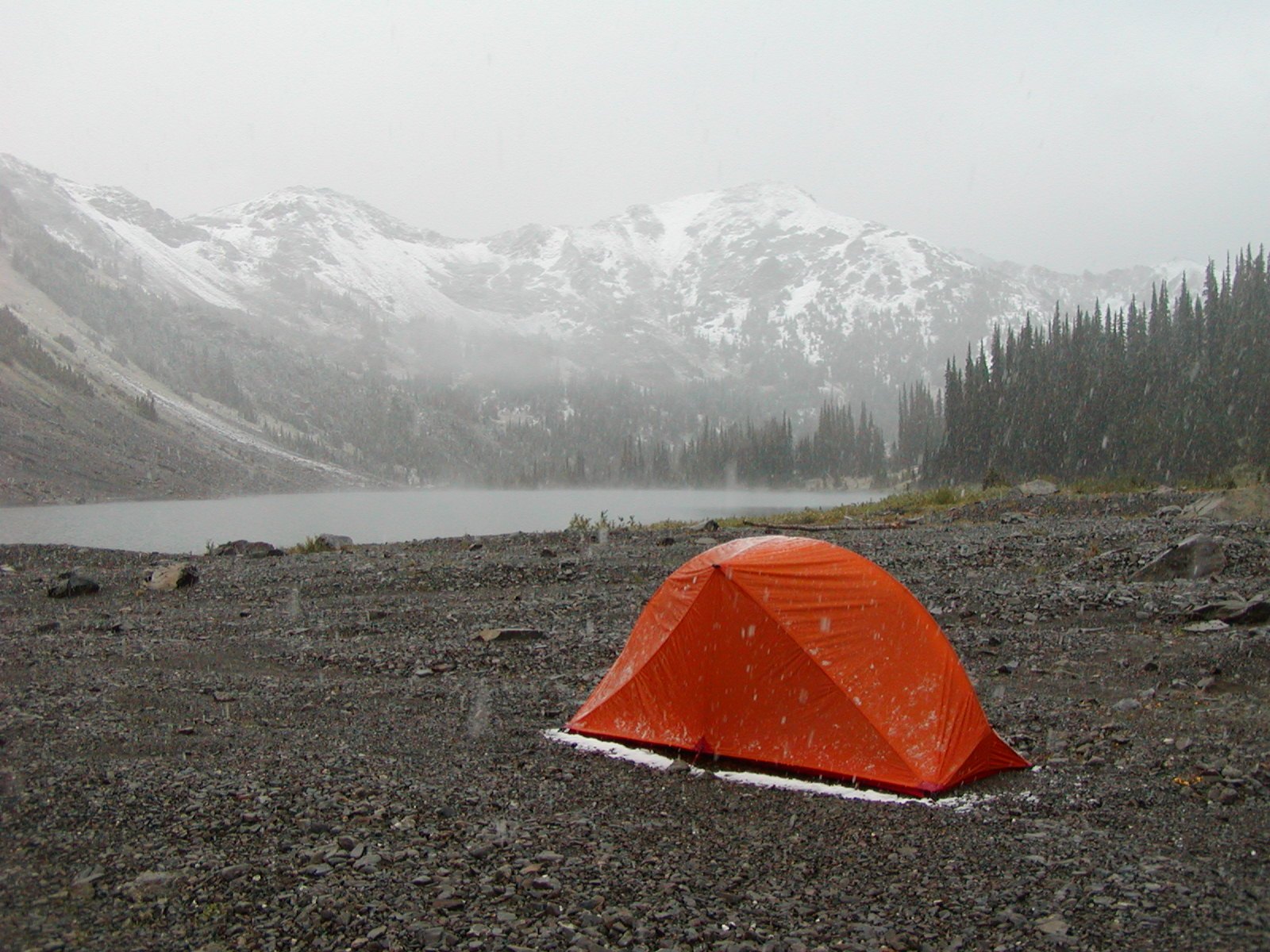
Few pieces of gear shape a camping trip the way a tent does. It is the roof over your head, the wall between you and the wind, and the one thing everyone in camp will complain about if it leaks. Tents are sold with numbers that mean less than they seem to, and the shelter that suits a canoe trip on the Llano River is not the one we would carry up a Colorado ridge in October. Here is how we sort through the options, with real figures where they matter.
Capacity ratings and the space you actually get
A tent’s capacity rating, the “2P” or “4P” on the box, tells you how many standard sleeping pads will fit side by side with no gap. Most makers assume a pad about 20 inches wide, so a two-person tent may be only 42 to 50 inches across at the shoulders. Two adults fit, but there is nowhere for boots, a dog or a wet jacket. Our rule is simple: for backpacking, buy the rated size if you travel light; for car camping, or if you sleep with a dog, add one person to the rating. A three-person tent for two people is a comfortable home.
Look past the rating to floor area and peak height. Around 30 square feet is a snug two-person backpacking tent, 40 square feet is roomy. Peak height matters more than most people think: below 40 inches you dress lying down, above 45 inches you can sit up and play cards while the rain comes through.
Three-season or four-season
Three-season tents are what almost everyone needs. They are built for spring, summer and fall, with plenty of mesh for ventilation, a rain fly that sheds moderate storms, and poles that bend in a gust rather than snap.
Four-season tents are built for snow loading and sustained high wind. They use more poles, heavier fabrics, solid panels instead of mesh, and steep walls that shed snow. They are also hot, heavy, and often 1 to 3 pounds more than a comparable three-season tent. Unless you camp above treeline in winter, or expect real snow on the fly, you do not need one. Some makers sell an extended-season design, which is a useful compromise for shoulder-season trips in the mountains.
Freestanding or staked, and the vestibule question
A freestanding tent stands up on its poles alone. You can pitch it on a rock slab, shake the dirt out in the morning, and move it ten feet without taking it down. It costs a little weight, because the pole structure has to hold its own shape. A semi-freestanding tent needs a couple of stakes at the foot end to pull out the corners. A non-freestanding tent, including most ultralight trekking-pole shelters, relies entirely on tension from stakes and guy lines. They are lighter and cheaper for the fabric you get, but they demand good ground and a little practice. We like them on established trails and dislike them on granite.
Weight classes, with numbers
Tent weights are quoted two ways. The packed weight includes stuff sacks, all the stakes and the repair kit. The trail or minimum weight counts only the body, fly and poles, and it is the number most brochures lead with. Compare the same figure across models. For a two-person tent, the classes look roughly like this:
- Ultralight: under 2.5 pounds, usually a single-wall or trekking-pole design in very thin nylon or a laminated fabric.
- Lightweight backpacking: 2.5 to 4 pounds, the sweet spot for most double-wall, freestanding designs.
- Standard backpacking: 4 to 6 pounds, tougher fabrics, more space and a lower price.
- Car camping: 8 to 25 pounds and more, with standing headroom, fiberglass or steel poles, and no reason to worry about weight at all.
Split a tent between two packs and three pounds becomes a pound and a half each, a fair trade for a shelter that will last a decade.
The vestibule is the covered space between the inner tent and the fly. It is where packs, boots and the stove on a rainy morning live. Eight to ten square feet per side is generous; five is minimal. Two doors and two vestibules mean nobody crawls over anybody at two in the morning, and we consider them worth the few ounces on any tent for two. Check that the fly reaches close to the ground on the windward side, that the doors have double zippers, and that there are interior pockets and a loop for a headlamp.
Fabrics and hydrostatic head
Most tents use nylon or polyester, rated by denier, the thickness of the yarn. A 15- or 20-denier fly is ultralight territory and needs care; 40 to 70 denier is the durable middle; car-camping tents run to 150 denier and beyond. Nylon is stronger for its weight but stretches and sags when wet, so you retension the guy lines at night. Polyester holds its shape and resists ultraviolet light better, at a small weight cost. Laminated composite fabrics are lighter still and do not absorb water, but the price is startling.
Waterproofness is measured as hydrostatic head, the height of a water column the coating holds back before it leaks, quoted in millimeters. A fly rated at 1,200 mm keeps rain out; 1,500 to 2,000 mm is the comfortable norm. Floors take more pressure, from knees and hips pressing on wet ground, so look for 3,000 mm or more, and use a footprint or a cut sheet of polyethylene under any floor below that. Coatings fade with years of sun, so a tent that was waterproof when new will eventually need a reseal. Seam taping is standard on good tents; on cheap ones, buy a tube of seam sealer.
What it costs
Prices in the United States fall into fairly clear bands. A basic car-camping dome for two to four people runs $60 to $150 and is fine for a few fair-weather weekends a year. A solid three-season backpacking tent from a reputable maker costs $200 to $350; this is where we tell most people to spend, because the poles, zippers and coatings are noticeably better than the tier below. Premium lightweight tents sit between $400 and $600, and laminated ultralight shelters run $600 to $900. Four-season expedition tents start near $500 and climb past $1,000. Buy the best tent in the class you will actually use, pitch it once in the yard before the trip, and it will serve you for years.