
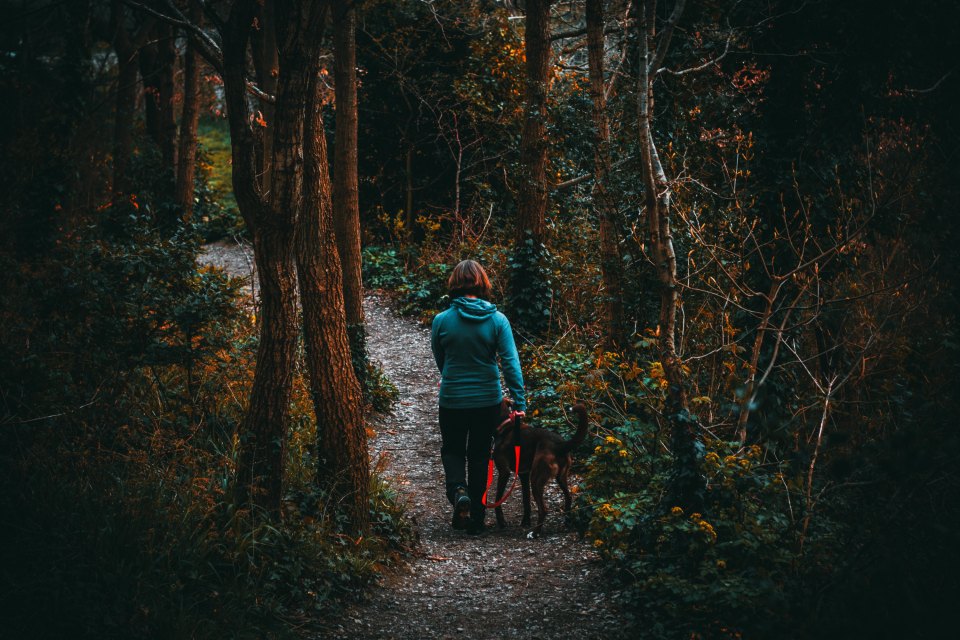
Morristown National Historical Park, in the rolling hills of northern New Jersey, is where the Continental Army spent the worst winter of the Revolutionary War. It is also, quietly, one of the best places in the region to hike with a dog. The park’s Jockey Hollow unit has 27 miles of trails through hardwood forest and old farm fields, dogs are welcome on all of them, and the ground you walk was once home to more than ten thousand cold, hungry soldiers. We have walked it in every season with a dog at heel, and this is what you need to know.
Washington’s winter of 1779-80
General George Washington brought the main body of his army to Morristown in December 1779, choosing the site for its defensible hills, its distance from the British in New York, and the support of the local farms. The winter that followed was the coldest of the century. New York Harbor froze solid, snow lay several feet deep, and more than two dozen separate storms hit the encampment. The soldiers cut down some six hundred acres of oak, chestnut and walnut to build about 1,200 log huts in neat rows on the slopes of Jockey Hollow, each hut holding twelve men. Supplies failed, pay stopped, and men went days without meat or bread. That the army held together at all is one of the quiet miracles of the war.
Washington himself lodged at the Ford Mansion in the town of Morristown, a few miles away, which is now the park’s headquarters unit with a museum. Jockey Hollow was the soldiers’ camp. Today you can see the Wick House, the farmhouse that served as headquarters for General Arthur St. Clair, and a small group of reconstructed soldier huts on the hillside above it, which give a sober idea of how tightly twelve men lived through that winter.
The trails
The 27 miles of trails in Jockey Hollow are blazed by colour and interconnect, so you can build a walk of any length. The Yellow Trail, also known as the Grand Loop, is the backbone: about 6.5 miles around the outer edge of the unit, mostly gentle grades with a few steady climbs, and it passes the hut sites and the ridges where the brigades were posted. The Primrose Brook Trail is a short, shady loop that follows a clear stream, a good choice for a hot day or for a dog that likes to wade. The Aqueduct Loop and the Mount Kemble Loop add distance and views. The New Jersey Brigade area, a separate parcel to the south, has quieter woodland paths and the site of a smaller encampment.
Surfaces are packed earth and gravel with roots and a few rocky sections; nothing needs special footwear beyond decent shoes, but the hills add up. A dog in good condition will manage the Grand Loop easily. An older dog will be happier with the two or three mile loops near the visitor centre.
Leash rules and park etiquette
Dogs must be on a leash no longer than six feet at all times, and the park does enforce it. The reason is not bureaucracy. The trails are shared with horses, trail runners and families, white-tailed deer are everywhere, and a loose dog after a deer can be a mile away in a minute. Dogs are not allowed inside the Wick House, the huts or the visitor centre. Pick up after your dog and carry it out; there are bins at the trailheads but none along the trails. Keep your dog off the earthworks and hut sites, which are protected archaeological ground.
Water, heat and ticks
Primrose Brook and a couple of smaller streams run through the unit, but they shrink in late summer and we would not count on them. Carry water for the dog as well as yourself, at least a litre for a mid-sized dog on a warm day, and a collapsible bowl. New Jersey summers are humid, and a black-coated dog on an exposed field trail in July can overheat quickly. Walk early, rest in the shade, and turn back if the dog starts to lag or pant heavily. There is drinking water at the visitor centre.
This is Lyme disease country, and the deer that graze the old fields carry plenty of blacklegged ticks. Keep your dog on a veterinarian-recommended tick preventive, stay in the middle of the trail rather than brushing through tall grass, and check the dog thoroughly at the car: ears, armpits, between the toes and under the collar. Check yourself too. Poison ivy grows along many trail edges, and although dogs are not affected by it, the oil transfers from their coat to your hands. Black bears wander through occasionally; they are rarely a problem, but they are another reason for the leash. Coyotes and foxes are common at dusk.
Seasons
Spring brings mud, wildflowers and the first ticks; the trails dry out by May. Summer is green and shady on the wooded loops but hot and buggy in the open fields. Autumn is the finest season here, with oak and hickory turning colour in mid to late October and cool, dry footing. Winter is the most evocative time to visit: with snow on the ground and a hard wind through bare trees, the hillside of hut sites tells its own story, and the trails are almost empty. Bring traction devices for icy days. Hunting is not permitted in the park, which is a comfort for dog walkers in the fall.
Getting there and planning the day
Jockey Hollow is about 35 miles west of New York City, off Interstate 287 near Bernardsville and Morristown. Entry is free. The grounds are open daily from morning until sunset, and the visitor centre has maps, restrooms and a small exhibit. Give yourself the better part of a day if you want to do the Grand Loop and see the huts, and stop at the Ford Mansion in town afterward if the dog can wait in a shaded car. It is a rare place where a good hike and a piece of American history sit on the same ground, and one of the rarer ones where the dog is welcome to come along.